Monday, April 27, 2026

Ozzy Osbourne and Satanic Fears


Ella Plummer

Ozzy Osbourne and Satanic Fears


Ozzy Osbourne recognized societal fears of Satan and "sin" and continued to live a wild, "sinful" life and continued use of demonic imagery. He was and still is often noted as an embodiment of sin among Christian communities. Many of his fans saw him as "a symbol of rebellion against societal norms" (Sutton 1). This image allowed him to stay true to his beliefs and stand out during the launch of his career in the 1960s. He believed organized religion was ridiculous, too confining, and he used imagery, costumes, and his music to highlight these opinions. He wore dark clothing, dark cross necklaces, and symbols of the devil, like bats. In one of his first songs, he refers to himself as Lucifer. He sings, "My name is Lucifer". He continued releasing music amidst growing societal Satanic fears during the 70's and 80's. Movies like "The Exorcist"were released in the 70's, which contributed to growing fears of Satan possessing human bodies. During the 1980's, there were heightened fears of satanic rituals.

History of the Devil in American Music- Ella Plummer

I found it very interesting that jazz in the 1920's in the United States was labeled as demonic. Jazz was played in various places including, "sporting houses", and this terrified parents. They were worried the music itself was influencing their children to dance inappropriately. The Pope Pius X in 1903 banned saxophones, as he thought of them as a "scandalous" instrument. Jazz was banned for a while during the 1920's in public dance halls as well. I found this very interesting, as Jazz is now played in elevators, hotel lobbies, and restaurants, and is considered family friendly and generally, non-controversial in today's world. Tritones, a musical interval that goes across three entire tones, was and is commonly used in Jazz and metal music and was referred to as the “The Devil’s Interval". There are also rumors that blues and pop musicians transformed into successful musicians by selling their soul to the devil. There was no proof of this interaction. These rumors were all spread by word of mouth, which shows how fears in society can be made entirely by society. Perhaps, many instances of Satan are used to explain the unexplainable evil that exists in the world.

Satan in the Modern World Devan Donnelly


Mention of Jeffrey Epstein Warning:

After last Wednesday’s class we discussed Satan in history, and we discussed heavily how he reappears and deceives mass groups of people and does harm to the greater good. This made me think about Satan in the modern world, and the current character I believe that most accurately represents this idea is no other than the New York financier himself Jeffrey Epstein. Epstein deceived elite officials while committing atrocious acts, and he manipulated his way to gain power over some of the most powerful people in the world.

This idea was reinforced to me when I viewed an interview clip by the BBC, where Epstein is directly asked if he believes he is “the devil himself.” Instead of giving a clear or remorseful answer, he responds in a strange and almost detached way “I have a good mirror”. This response is crazy to me, and it reflects a lack of accountability and deeper moral awareness. But what does he mean by this… could he be the reincarnation of the devil? Did he really kill himself? Will he return??

The Chilling Adventures of Sabrina- Ella Plummer

 The Chilling Adventures of Sabrina


The main character in this show is Lilith, also called Madame Satan. After leaving Adam, she is banished from the Garden of Eden, and Lucifer saves her. She becomes Lucifers servant here, which is interesting as she is often depicted as a symbol of feminine power. She does later kill a woman named Mary Wardwell and takes over her appearance and life. Lilith was a mentor to Sabrina Spellman then after. They don't get along at first, but then they bond by both having an interest in taking down the "Dark Lord". They end up locking Lucifer away, and Lilith is able to finally become the queen of Hell. The people of Hell did not accept Lilith as their queen, but they did accept Sabrina as their queen. Sabrina is Lucifer's daughter, so they deemed this more appropriate. Sabrina made Lilith her Regent and left her to handle daily activities. Lilith does whatever it takes to ultimately become the queen of Hell. She goes through a few more obstacles before becoming queen and along the way she does kill her own child. Lucifer tries to take his and Lilith's child, Adam, away from Lilith, and Lilith is so angered by Lucifer trying to leave her and take their child that she ends up killing the child. She doesn't want Lucifer to get what he wants, his child in solidarity. It is interesting to see how Lilith prioritizes her "career" over all else. She also is against Lucifer throughout the entire series, which is interesting and supports ideas that Lilith is a representation of feminine power. Lilith prioritizes getting what she wants over all else. I think this series is about her disobedience to men, but even more so about eliminating those who stand in way of her goal. I think men and women that stand in her way are treated equally. Moreover, this does support gender equality ideas surrounding Lilith by treating both genders alike.

Sunday, April 26, 2026

are people ever really fully good or evil? - ally c

I've been having hard time trying to think of something to post on the blog all year honestly, but then the other day I was sitting in bed and watching some random episodes of The Vampire Diaries and it made me think about class actually and I figured it'd be a decent blog post. I started thinking differently about what “evil” actually means. In the show, no character is completely good or completely bad all the time. Someone like Damon can do something really harmful, but you still understand his motivations or see moments where he tries to be better. That makes it hard to label anyone as purely evil.

This made me connect to what we’ve been talking about in class because evil doesn’t feel like something separate from people. Instead, it feels tied to emotions and choices. A lot of the characters make bad decisions because of things like love, jealousy, anger, or wanting to protect someone. Those reasons feel very human, even though the characters themselves are supernatural.

It also shows how much perspective matters. One character’s “wrong” decision can seem justified from their point of view, which makes the idea of evil less clear. It’s not always just right versus wrong.

The show kinda suggests that evil isn’t something fixed. It’s more about the choices people make and how they respond to different situations. That makes the idea of the devil feel less like a single villain and more like a reflection of human flaws.

Tuesday, April 21, 2026

Twin Peaks and The Devil // Noelle Vaught, Post 4


BOB, the primary antagonist of Twin Peaks.

If you've ever seen Twin Peaks by David Lynch, then you will recognize the face of this man. Twin Peaks is a mystery show with supernatural elements produced in the 1990s (at least the first two seasons and the movie) featuring the small, titular town of Twin Peaks. The narrative centers around the murder of a local girl named Laura Palmer, which leads to the arrival of outsiders and upheaval in the local community. The show is about the "evil that mean do," the dark urge it believes to lurk within us. 

BOB is a sort of demiurge-- he is of an evil place, and does evil in turn. He appeals to human, hedonistic desires such as sex, violence, and drug abuse. Those who can see him are described as doomed. To exist in our plane, however, BOB requires a vessel. In this case, he makes use of Laura's father, Leland Palmer. It is revealed that in this way, he killed Laura Palmer, seeking to become her and make use of her young body and energy to further spread his evil. He connects deeply with Christian ideas about possession and the dark urge of sin lurking within us all; exploiting and condemning those who "fly too close to the sun" to a terrible death. 

That being said, interestingly, the show does not necessarily blame those who fall victim to his possessions. Laura Palmer was simply a troubled youth who sought respite from the high expectations placed upon her in hedonism- as many do. Even for Leland, it is open to debate how much of his actions towards Laura (murder and other unspeakable things) were truly him. The show deliberately creates an uncomfortable ambiguity in this. 

Thursday, April 16, 2026

Signalis and Hell // Noelle Vaught - Post 3


Cover art for Signalis (2022)
    

Signalis is a 2022 survival horror computer game developed by the German developer known as Rose Engine. It is in the same vein and styled after other games like Resident Evil and Silent Hill 2, though it also openly wears influences from authors such as H.P. Lovecraft and Robert W. Chambers. It is set in a dystopian future of an alternate, but similar solar system which is locked in conflict between the Eusan Nation and the Eusan Empire. It is one of my favorite video games of all time for its exploration of personal autonomy, life under the machinery of an oppressive state, and ultimately, love and letting go. The plot centers on two characters: LSTR, or "Elster," a Replika (essentially and android) and Ariane, a bioresonant (psychic) human that are in a forbidden relationship. It is worth noting that both characters are women-identifying. 

    As one plays the game, it becomes increasingly clear that the reality with which we are first presented is mostly a 'lie.' Initially, we are led to believe that we are in a prison camp that has been overrun by a mysterious plague known as Sierpinski-23 to look for a woman named Alina Seo. With the progression of the story, this initial narrative becomes far less certain, with the eventual revelation that our character is stuck in a seemingly endless cycle. She must go through hell, time and time again, in hopes that she will have the strength to end it the only way she knows how. This being: "Remembering our promise." Remembering Ariane. 

    As it turns out, both Elster and Ariane are dying. This is because, in reality, both are a part of the Penrose program. Essentially, a propaganda effort wherein the Nation fires shuttles off into the void in hopes of finding habitable worlds. In reality, the program is a suicide mission, the shuttle only meant to last for 3,000 days before degradation. Ariane and Elster pushed it to 5,400, resulting in radiation poisoning and other nasty things. In an attempt to save their lives, Ariane utilized her extremely powerful psychic abilities to construct a different reality- only it went wrong. Horribly so. Now, the only immediately obvious way out is to fulfill the promise you made to Ariane: To end her suffering. To let go of her. Easier said than done. 

    What is interesting, and more directly related to our class, is the landscape which you navigate throughout the game. It is defined as a descent into the earth, followed by a strange, inverted ascent. You begin in a snowy wasteland, climbing down a black stone staircase cylindrically carved into the earth. As you go deeper into the facility, you eventually reach the mines below, and from there? Another, decayed, rusted facility- a landscape of blood and torment and meat. Not unlike hell- a comparison which the game itself heavily draws upon. Particularly, when you finally reach the first, false ending of the game: You re-emerge into an inversion of the staircase you first entered the space of the game through, climbing up into a red wasteland dotted by black stone pillars. Here, you encounter several hallucinatory experiences, as well as the line: 

    "Perhaps, this is Hell." 

    Furthermore, the space of Sierpinski is inhabited by the demonic distortions of other Replikas, who are very clearly suffering from both physical and mental ailments. They act as obstacles for your character just the same as the twisting, changing landscape of the facility. In hindsight, I cannot help be reminded of the "ha Satan," the accuser and obstructor. Elster's conviction is tested the deeper she goes, the presence of these distortions growing heavier and taking on more dangerous forms, and she must experience it again and again to try and remember the promise she made. This, in my opinion, is a whole lot like Hell and/or purgatory. 

Wednesday, April 15, 2026

Capcom and the demonic - Brett Brewer


                                                                                            Capcom's Logo

    The realm of fiction is littered with metaphorical utilizations of the demonic. One of the most common concepts subject to this metaphorization is that of power. Because of its inherent connection to godly forces, the demonic is ripe for usage as a metaphor concerning sheer domination over another being in some form or fashion. It is so common in fact, that Capcom, one of the most prolific gaming companies in the world, has used it in two separate franchises; Street Fighter and Devil May Cry. 


Akuma as he appears in Street Fighter 6

            The most famous antagonist in the Street Fighter franchise is, of course, Akuma. While he was never the main villain of any of the games, he’s always been a scene stealing presence thanks to his backstory and playstyle. The former is a classic fallen angel story, where he was a promising young fighter whose obsession with mastering the art of the Satsui no Hado led him to lose his humanity and become the demonic rival of the series protagonist, Ryu. The latter is where the power metaphor comes into play, because his playstyle is the same as that of the series protagonists, Ryu and Ken, but with a few important twists. Those twists all serving to emphasize how powerful he is when compared to those two. For example, all three characters have a fireball, but only Akuma’s fireball can be thrown in the air. Not only that, his walk speed is faster than Ryu and Ken’s, and he has access to a teleport and a special super move called “Raging Demon”. He is, in a way, the perfection of the playstyle brought forth by Ryu and Ken, thus showing how the demonic can be linked to power. However, Akuma’s demonic power comes at a heavy cost for him. In all of his official Street Fighter appearances, Akuma has a more obvious weakness than most other characters in the cast, that being his low health. None of the games have a demonic explanation for why his health is so low, but if one were to expand on this metaphor, people are often said to have “sold” their souls to the devil, and in certain contexts, another word for soul is life and in video games another word for life is health. Akuma became the most powerful fighter in the world, at the expense of being the most fragile, showing how demonic forces will bring someone power only to rot their souls. 


                                                           Dante and Vergil fighting at the end of Devil May Cry 3

            A different Capcom series of video games which deals with the demonic as a metaphor for power is Devil May Cry. This time, however, the metaphor is not exclusive to one or two characters like in Street Fighter. The metaphor defines the story of the entire franchise. Dante, our main character, is the son of Sparda, a demon who betrayed his people and cast them into the netherworld, and Eva, a human woman who Sparda married before his death. In his youth, Dante rebelled against his demon side, becoming a demon hunter who just wants to enjoy the simple pleasures of his human life. However, he is forced to embrace his demon side after he is nearly killed by his twin brother, Vergil. Vergil is the antithesis to Dante’s lifestyle, embracing his demon half as he desires nothing more than to be the most powerful being in the world, going so far as to undo his father’s actions by attempting to unseal the netherworld. But Vergil was not alone in his quest for power though, as he is betrayed by his accomplice, Arkham, a man who killed his own wife so he could bring out demonic control of the Earth. Dante and Vergil team up to defeat Arkham, though, and both twins utilize human and demonic abilities to defeat the purely demonic and corrupted Arkham. Their victory over Arkham showcases how power is worthless if someone has nothing to fight for besides obtaining power. In Dante’s case, it’s saving humanity, and in Vergil’s case, it’s revenge against Arkham. When Vergil does get his revenge against Arkham, though, he returns to solely questing for power, and has one final duel against his brother which he loses, as he doesn’t possess Sparda’s “soul” as Dante would put it. Vergil then exiles himself in the netherworld, leaving Dante as the sole son of Sparda on Earth. There’s more to Vergil and Dante’s story, but I feel as though the game this story is from, Devil May Cry 3, was the game which made the most of the demonic as a metaphor for power. Dante representing those who do not wish to seek power but must use it to protect what they love, and Vergil representing those who seek power but fail to become strong because they lack anything worth fighting for. Once again, showing how the demonic will bring one power, at the cost of their souls.

Jesus Christ expelling a demon from someone as seen in Mark 5

            In both of these game series, Capcom utilizes the demonic to tell a story about how power is a necessary, yet evil force. Much in the same way how in certain religious doctrines, the demonic is an essential force but is simultaneously a force which facilitates the wickedness of the world. The metaphor here is not coincidental. People aspire to live in a world in which power doesn’t exist so it cannot those who use it, like Akuma. However, they forget that the only way one can defeat those who are corrupted by power is the use of power by someone who desires a world in which power cannot corrupt. For certain religions, good is only defined by its ability to thwart evil. Ahura Mazda is good because he encourages those on Earth to thwart the evils of Angra Mainyu, Jesus is good because he performed miracles cleansing the commoners from demons, Marduk is good because he was able to brutally murder Tiamat and bring her to chaos, and Dante is good because he was able to use his demonic side to defeat Arkham and pacify Vergil. Therefore, the reason the demonic is such a common metaphor for power in fiction, is because the relationship religions have regarding the demonic and power is one which lends itself to a very interesting story.

Tuesday, April 14, 2026

The Predator (2018) Devan Donnelly


This past weekend I watched “The Predator” movie (2018), it is apart of the classic predator movie franchise from the late 80s with Arnold Schwarzeneggar. For those unaware these movies are essentially about an alien species that visits Earth who are considered “God’s perfect killers”. Although the aliens do not directly resemble the monsters within our readings of revelations, but they do have some similarities, with their protruding horned fangs surrounding their mouths.

Revelation speaks upon evil as a growing force that causes chaos and becomes increasingly dangerous overtime. Within the movie it is shown that the alien essentially upgrades itself by using the DNA of the species it kills to become smarter and harder to stop. This point resonated with me on how evil adapts faster than humans can react. The predator is seen as almost god-like judging who gets to live and who does not. Theres a scene where the alien escapes a lab and it takes out everyone who tried to fight back besides one, it judged the last scientist’s weakness and decided to spare their life.

To wrap things up, The Predator is an apocalyptic evil that constantly evolves, judges humanity, and creates enormous amounts of chaos. The movie makes a brief joke about the Book of Revelation, but it does not directly base its plot on it. However, the many similarities in how the evil adapts and tests people make it very powerful.


Fallen Angel Painting- Olivia Hayes

    The Fallen Angel painting, by Alexandre Cabanel, depicts Lucifer, the fallen angel, in a very humanistic light. This painting, specifically, is well known because of the singular tear falling from Lucifer's face, which helps us truly grasp the emotions that are meant to be felt through this painting. This painting showcases the beauty of the fallen angel along with the story and the building fury within him. It is through this depiction and the usage of shadow that we are also able to sense the feelings of revenge that are accumulated throughout the painting.

    This painting was created in 1847, during this time period, Satan was not viewed as a scary devil and all-knowing ruler of hell, but rather a complex figure. It is also important to note common traits associated with Satan during this time, such as a figure of rebellion, pride, and melancholy, and viewed through a sympathetic lens. 

    This idea of Satan was created thanks to the art that was created during this time period. Thanks to paintings such as Fallen Angel and romantic literature such as John Milton's Paradise Lost. Satan was portrayed as the story of a man, Lucifer, and his tragic story of a man who lost everything, creating the tragic protagonist that we can see throughout paintings and stories of Satan/ Lucifer from this time period.

    This leads me to ask: why did we specifically romanticize the devil in artwork during this time period? And, what portrayal of Satan is more accurate, today's idea of the devil or the 1800’s romantisized idea of Lucifer, the tragic protagonist?


SB BARNES - HANNIBAL'S GREAT RED DRAGON RAMBLE


I will admit. Its been a little while since I've engaged with the subject material I'm about to discuss. But I need to talk about this because I have been losing my mind for the last few weeks of class.

Something clicked in my brain when we pulled up William Blake's artwork of Satan as the Great Red Dragon from the Book of Revelation. I wish it was something, yknow, art history related regarding the renowned work of William Blake or something adjacently scholarly... but it was notttttt... it was season three of NBC's Hannibal series... 


Based on the first installment of Thomas Harris' iconic book series, best known for its second installment, The Silence of the Lambs, the third season of NBC's Hannibal centers its titular antagonist: Francis Dolarhyde (and his - perhaps not very tactfully written - alternate personality, The Great Red Dragon). 

Dolarhyde is haunted by the presence of The Great Red Dragon, leading to an obsessive fascination with its image and a compulsive desire to 'become' the beast. He is covered in tattoos of Blake's artwork depicting the dragon (seen above) and... I think at some point he breaks into the archives and eats the painting??? He also kills people but that's whatever.

On my first watch of this series I did not know that The Great Red Dragon was actually a representation of the devil. Although the series still reads incredibly clearly without having known this information, having the contextual basis proves for a much more interesting interpretation. Being able to connect this alter / figure of the dragon to the devil points to a greater trend of conceptualizing the devil as a malevolent being which tempts and turns man to evil and sin. I also think that there might be some layer of juxtaposing Dolarhyde and his love interest to Satan / The Dragon and the Woman Clothed with Sun from Revelation (also seen in Blake's artwork).

To conclude: I learned something that genuinely better informed my understanding and analysis of another piece of media! Nice! 

Aedan Macken - Cuphead, The Devil, and Racism

 The indie run and gun game developed by Studio MDHR is most notable for its notorious difficulty, requiring pattern recognition for every fight in the game, and its unique style as it is hand-drawn and animated in the style of 1930's animation, cartoons, and shorts while drawing on the time period's aesthetic and music.

This can be seen in the basic plot of the game, where two anthropomorphic cups gamble away their souls to the devil, and are forced to fight the runaway debtors of the devil to deliver their soul contracts back to the satanic villain. The fights are each uniquely themed, some based on food and flowers, others on classic cartoon references, and some on specific mythologies. The game did exceptionally well upon release and had a DLC come out eight years later to immense success. However, there is something to note about the way the main villains in Cuphead are portrayed. 

Starting with "the Devil's Right-Hand Man", as the character's theme song proclaims, King Dice. The character is based on a six-sided die and serves as the manager of the Devil's casino. His fight is filled with references to gambling, cards, poker, horse races, and other things considered "vices" and "sinful" behaviors like drinking and smoking. He is also one of the only characters with their own song with lyrics, performed by Alana Bridgewater, a Gospel and Jazz singer. King Dice is drawn in the same 1930's Rubberhose animation style as the rest of the characters, but he is directly inspired by a real person: Cab Calloway, while all other characters that draw inspiration draw from fictional characters. The suit, catchphrase, jazz singing, and iconic pencil mustache all reference the Harlem jazz singer and performer.


The inspiration for the Devil's design is perhaps more obvious, even if it is more concerning. While all the characters and enemies in Cuphead are humanoid to a degree, the Devil is one of the most. He is still drawn in the distinct Rubberhose style, but he draws inspiration from the more problematic and racist depictions of black people in animations of the time. He has prominent lips, dark skin (intended to be furry but less obvious than in concepts), a wide nose, and his style of movement is almost directly taken from racist caricatures and blackface depictions in Fleischer Studio's animated shorts.


The enemies of Cuphead represent the things seen as "sinful" and evil in the time that the game emulates. Gambling, drinking, smoking, and fighting were all connected to the Devil, as part of movements to encourage people to stop these behaviors. However, it is also worth noting that much like the time period, Cuphead also includes jazz music, the likeness of the first Black musician to sell one million copies of a record, and a character that references how Black people were mockingly portrayed in animations as being part of the "evil" and "demonic" you fight against in the game. Aspects of Black culture have often been connected with Satan and the Devil as a way to demonize and other the community, and it is upsetting that a game released in 2017 perpetuates those notions and stereotypes.

Monday, April 13, 2026

Spawn and his ties to Hell- Karma Mason


    Spawn is a character from Image comics created by Todd McFarlane. Spawn or Al Simmons, was a CIA assassin who was betrayed by his former boss and murdered him because he was asking too many questions. It is important to note that he was burned alive and when he died he was sent to Hell for his eternal punishment. He made a deal and sold his soul to a demon lord named Malebolgia, who's name is based on a section of Dante's Inferno that describes the ditches in the 8th circle of Hell where people who committed fraud are punished. Spawn sold his soul so that he could come back to Earth as a hellspawn and see his wife but he was returned how he looked in his final moments, a burned disfigured corpse. As he made a deal with a demon it obviously did not go the way he wanted it to. He was returned 5 years after his death, unrecognizable, and missing many of his memories. He becomes a sort of anti-hero after this and tries to to as much good as possible by taking down bad people in repentance. He later on ends up killing his master Malebolgia and being offered the throne of Hell. 

    There's a lot more that happens after this but the 12 disciples are figures in this book, the apocalypse is present, and God and Satan's battle. At one point Spawn gains the powers of a God and puts God and Satan in a pocket dimension so they can't cause the apocalypse. Make no mistake, while Spawn may be one of my favorite anti-heroes he was NOT a good man in his life despite his questioning his moral code at the end of his life. 

Thursday, April 9, 2026

Darth Maul and Revelation-Jackson M

    Earlier this month, Disney+ released a new animated Star Wars show called Maul: Shadow Lord. The series follows Maul, a former Sith Lord, as he starts to build a criminal empire while taking revenge on those who wronged him. While there are only two episodes of the show out right now, it still got me thinking about Maul’s journey through the Star Wars universe, which in turn slowly started to remind me of the Beast and Satan we have been talking about in Revelation. 

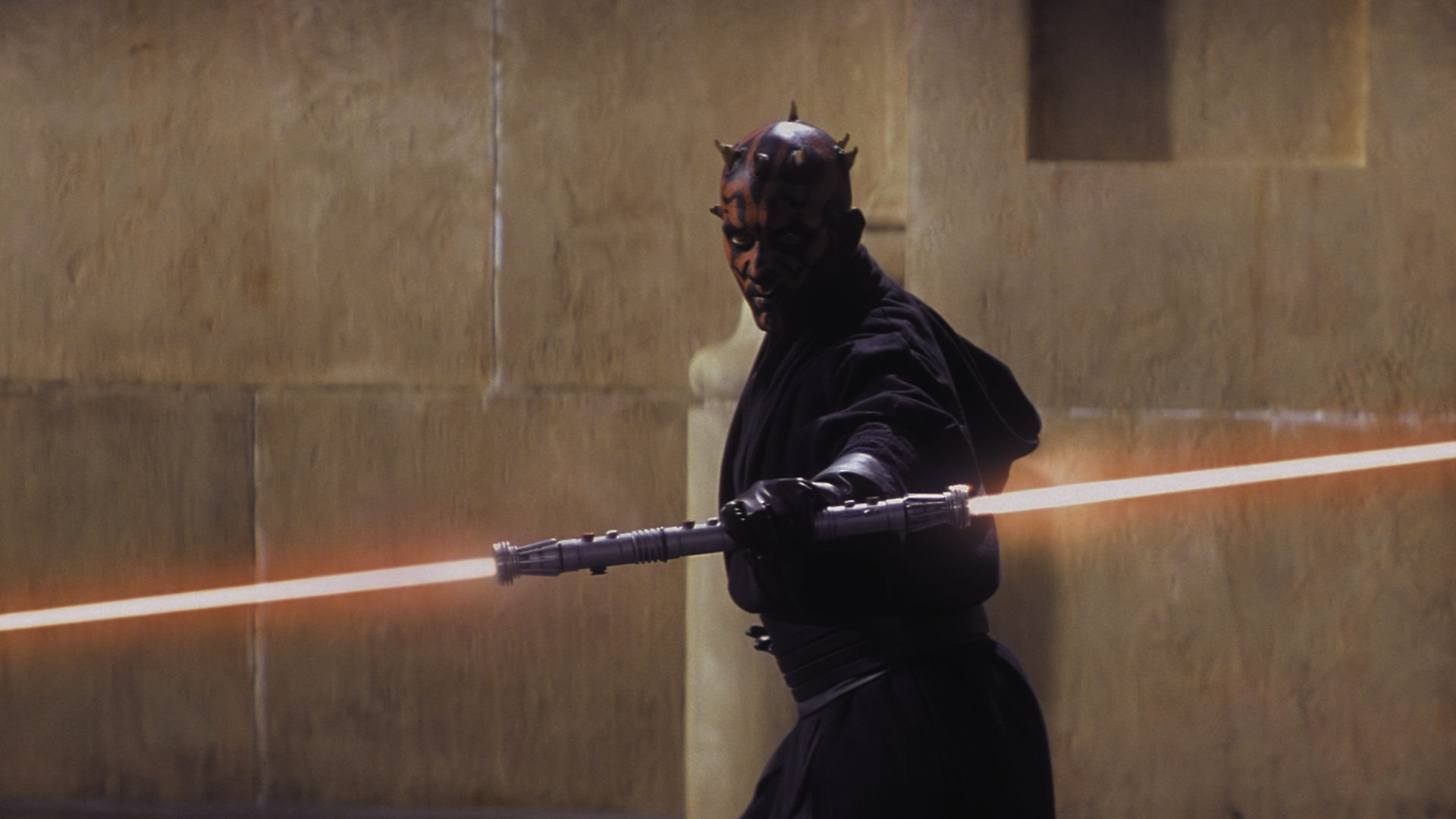
Maul is introduced in Episode I: The Phantom Menace as a (mostly) silent warrior who brandishes a double-bladed lightsaber and acts as an enforcer for Emperor Palpatine, just as Satan acts as an enforcer for the Beast. Similar to the Beast, Maul’s head is adorned with spikes in a crown-like shape, while his skin is primarily a bright red similar to the dragon's. In the climax of the movie, Maul is cut in half at the waist by Obi-Wan Kenobi and is seemingly killed. However, he returns in the animated TV Show The Clone Wars, where he is revealed to have survived through a catterpillar-eque robotic leg contraption and pure hatred, which has driven him insane.

Maul as he appears in The Phantom Menace

        Once he regains his sanity (and a new pair of legs), Maul enacts a plot to take over a planet called Mandalore (home of Mandalorians like Boba Fett), something he does by killing the leader of the planet. Similar to the Beast attaching brands to his worshipers, Maul rebrands the Mandalorian armor to match his physical appearance


An example of Mandalorian armor post-Maul's takeover 


    Despite several setbacks, Maul manages to maintain his power and continues to be a threat to the general public, as seen in his appearances in both Maul: Shadow Lord and Star Wars Rebels, just as Satan continues to be a threat to humanity after his appearance in Revelation. 

Maul's current appearance


    Overall, I find the parallels between Maul and both Satan and the Beast to be quite apparent. 

Wednesday, April 8, 2026

Sublime- Olivia Hayes


   Sublime, a band well known for songs like "Santeria," depicts many different themes within their music, and all their songs evoke a summer-like feeling. The band is also well known for their sun logo, which can be found in every t-shirt section everywhere. But have you ever actually zoomed in on the logo?

The sun was commissioned by the band and created by tattoo artist Opie Ortiz, a friend of frontman Bradley Nowell. This logo has become a common print on shirts similar to the Nirvana smiley face. But most people have yet to further examine the sun and the drawing that can be found within it. Located and hidden within the sun are many different demonic figures, including the devil himself. The sun itself contains skulls, a genie and his bottle, a ghost-like skeleton, a switch blade, and the devil, surrounded by flames.

While this logo contains a satanic representation, the band has never received pushback from conservative or anti-devil worship, similar to bands like Black Sabbath during the satanic panic. The band's logo has just been called trippy or stoner-influenced, which leads me to wonder if this band was around during the Satanic Panic, would they have received the same response as Black Sabbath or other Occult rock musicians? 

So, what do you think is Sublime pushing demonic imagery, or are they just represented by a trippy sun?


Thursday, April 2, 2026

The Devil’s Advocate and the Antichrist’s Journey

     I have very mixed feelings about the 1997 film The Devil’s Advocate. On the one hand, parts of the movie do feel uncomfortably mean-spirited, especially toward women, people of color and people living in poverty. Not that I think it’s intentionally racist or misogynistic, just extremely cynical in a very 1990s sort of way that hasn’t aged quite so well.

     But on the other hand, I think The Devil’s Advocate works as a brilliant ironic deconstruction of traditional Hollywood storytelling and the very concept of the Hero’s Journey. The story is one of Satanic temptation and corruption, but it’s presented in the format of a standard heroic character arc. What in most films might constitute likeable traits are the very flaws which lead the protagonist into moral decline.

     In case you aren’t familiar, The Devil’s Advocate stars Keanu Reeves as Kevin Lomax, a highly competent but morally flexible defense attorney who’s recruited to work at a major law firm owned by a man who is secretly the Devil (played to camp perfection by Al Pacino). As he rises through the ranks, Lomax indulges in more and more unethical conduct until Satan deems him ready to learn the truth — Lomax is his son, the Antichrist, and if he so chooses he can help the Devil bring about the end of the world.

     He ultimately rejects this fate, and he’s sent back in time and given the chance to take a different career path. He recuses himself from a case defending a child predator and decides to take a public moral stand. But the film ends with him succumbing to a new temptation as he pridefully accepts an interview to boast about his decision. The journalist’s face morphs into evil Al Pacino, and bam! “Paint It, Black” by the Rolling Stones. A perfectly bleak and hopeless ending.

Al Pacino as Satan in The Devil's Advocate

     There’s so much to be said about this film’s portrayal of Satan and the supernatural. The Devil is associated with everything from corporate hustle culture to infertility to breast implants to Donald Trump (yes) to incest to a vague, demonized form of “voodoo.” Any one scene in the movie could form the basis for pages of analysis.

     But, as I said, what I’d like to focus on here is the film’s subversion of the Hero’s Journey. I’ve taken many writing and screenwriting classes over the years, and Joseph Campbell is one name that has come up frustratingly often. Campbell’s famous theory of the universal Hero’s Journey wildly oversimplifies countless different traditions from around the world to fit an unhelpfully specific model of storytelling.

     And sadly, it's an even further simplified version that usually gets parroted in writing classes. For a good while, screenwriters have been taught the Hero’s Journey as a formula for engaging movie plots. George Lucas, for example, took inspiration from Campbell in writing Star Wars. The tropes and archetypes associated with this model — the call to adventure, the meeting of the mentor, the retrieval of the ultimate boon, etc. — can be found throughout modern cinema.

     In The Devil’s Advocate, these concepts are all turned on their head. Lomax is like the archetypal hero in that he is talented (at winning cases) and driven to succeed. For him, the call to adventure comes when an associate at Satan’s law firm offers him a job. Like any archetypal hero, he must decide whether to remain in the ordinary world he’s used to in Florida, or to take up the offer and go to New York. He has his temporary refusal of the call, his farewell to his mother, everything.

     And then, of course, he meets his mentor — “John Milton” a.k.a. the Devil. Milton assigns Lomax missions, offers him advice and teaches him how to face the challenges of the legal profession and the big city. During this period he also meets other archetypal characters, like a rival and a love interest (who later turns out to be his sister). His greatest test, the Campbellian Ordeal, arrives in the form of a murder case. He has to defend a corrupt, Donald Trump-esque (they even filmed in Trump’s actual apartment) real estate baron accused of killing his wife, stepson and maid.

     By giving up all his morals, ignoring warning signs and neglecting his own increasingly ill wife, Lomax is able to win the case (gaining the ultimate boon) and seal his fate. At this point, he must reckon with his parents, his earthly mother and his demonic father, to learn the truth about his identity. In the confrontation with his father, he is offered the chance to begin a new life as the Antichrist.

     This all looks to me like a deliberate perversion of the archetypal Hero’s Journey, with the hero’s every step closer to his goal taking him further from goodness. Satan says a couple times that Lomax’s greatest flaw is vanity, and this manifests in the film as a desire for corporate success, for an impressive reputation, for an uncomplicated extramarital affair, etc., all of which drive his anti-heroic quest.

     But what truly cements The Devil’s Advocate as a great deconstruction of the Hero’s Journey is its ending. Lomax rejects Satan’s offer, the evil resurrection which his journey has been building to, and is resurrected in a very different way, returning to the choice he made at the beginning of the film to defend a pedophile he knew was guilty. This time, knowing all he has to lose if he goes down the wrong path, he makes a different choice and recuses himself from the case.

     But when he decides to take the interview about his decision, he finds himself once again assuming the role of hero. Only now, instead of success as a great defense attorney, he’s pursuing fame as an upstanding moral citizen. One can only imagine where this new journey might lead our protagonist.

     Of course, as Satan points out, this ostensibly more righteous path is just another manifestation of Lomax’s vanity. In fact, knowingly embarking on a Hero’s Journey within the film is presented as practically synonymous with succumbing to vanity. It’s so tempting to think of ourselves as the protagonists of our own lives, but The Devil’s Advocate argues that this sort of thinking fuels evil in the world.

     Even without Satan’s influence, the film leads us to believe, Lomax would be a fundamentally negative influence on others. It’s in his nature, in human nature, to pursue selfish goals. The Devil acts as a manifestation of the destructive spiral associated with this kind of behavior. He encourages Lomax to indulge his vanity, ushers him into a position of power, connects him with other like-minded people and isolates him from those who might be positive influences.

     The Devil’s Advocate isn’t a perfect film by any means, but I do think it smartly uses its structure to convey its themes, and serves as a refreshing subversion of the all-too-popular Hero’s Journey. 

Ozzy Osbourne and Satanic Fears

Ella Plummer Ozzy Osbourne and Satanic Fears Ozzy Osbourne recognized societal fears of Satan and "sin" and continued to live a wi...